
The most common models mounted on loaders are HC42 .The most common models mounted on excavators are HC150 HC180.
Update time:2023-01-29 15:49:03
Description:Rolling is the fastest and most efficient compaction method for large fill areas. In small areas whe...
Rolling is the fastest and most efficient compaction method for large fill areas. In small areas where large equipment can't reach, hand-held compactors can be used. Vibrating plate compactors are best for granular soils. For cohesive soils, rammers or impact type machines are recommended.
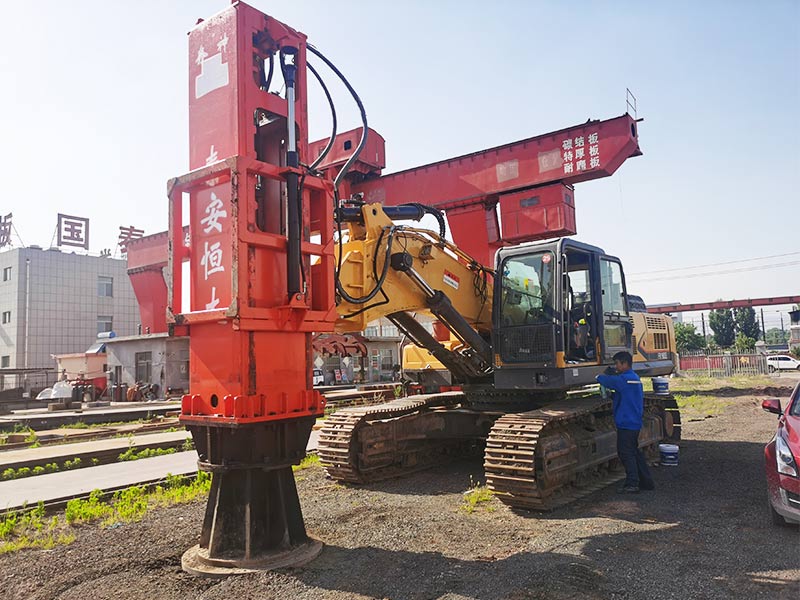
The selection of the compaction method (DC or RIC) and plant type for a particular project, will depend on ground and groundwater conditions, and requirements for design and execution. Each system has merits and limitations. It is important that these are understood and considered in the design and application of DC/RIC on a particular site and in the context of the prevailing ground conditions. Indeed, it may be necessary for more than one technique to be employed at a particular site to gain maximum benefit.
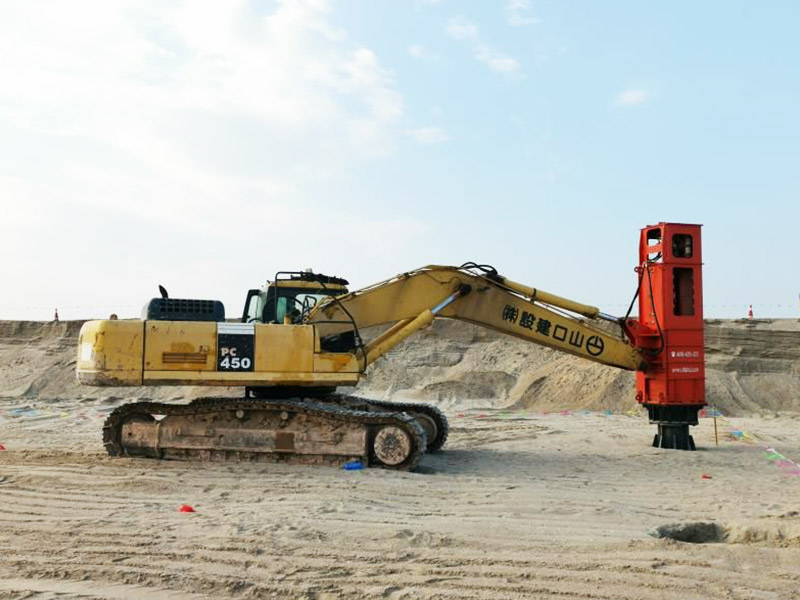
With RIC the total energy input will have a major influence on the depth of compaction. With the rapid impact compactor the energy per blow is very much smaller than conventional DC and the fixed energy per blow of typically 8.4 t.m is not the major influence on the depth of compaction due to the progressive top down improvement of the treated ground. Of much greater significance to the effective depth of compaction is the number of blows at a compaction point or the energy applied overall to the ground surface. For typical impact spacing, 35 blows will impart about 170 tonne.m/m2 of energy. This level of energy input has produced significant compaction to depths between 3 and 4 m in non-engineered generally granular fill and up to about 3 m in natural sand and silty soils using a 7 t hammer.
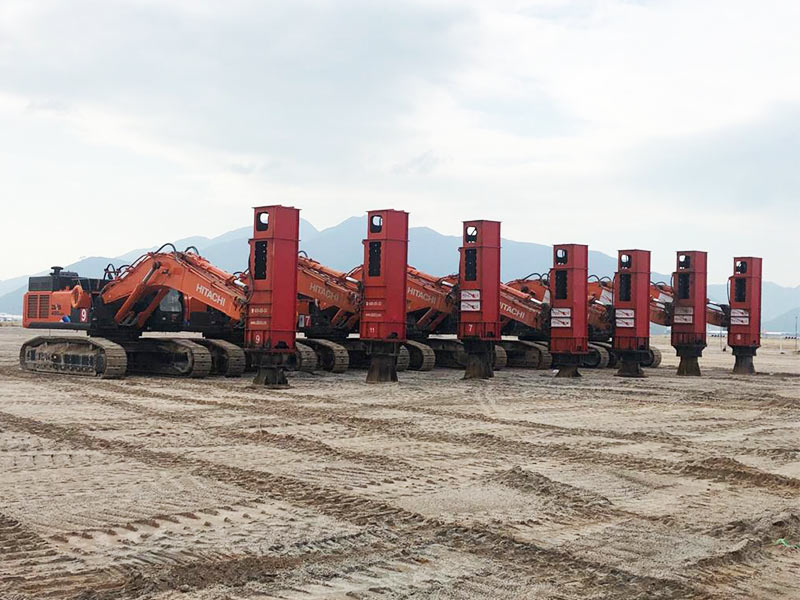
Rapid Impact Compaction with the Rapid Impact Compactor (RIC) is an innovative method in the field of near surface and deep compaction techniques. The RIC is a dynamic compaction device based on piling hammer technology. Dynamic energy is imparted by a falling weight dropping from a controlled height onto a patented foot. The foot of the device remains in contact with the ground; thus, the energy is transferred to the ground safely and efficiently.
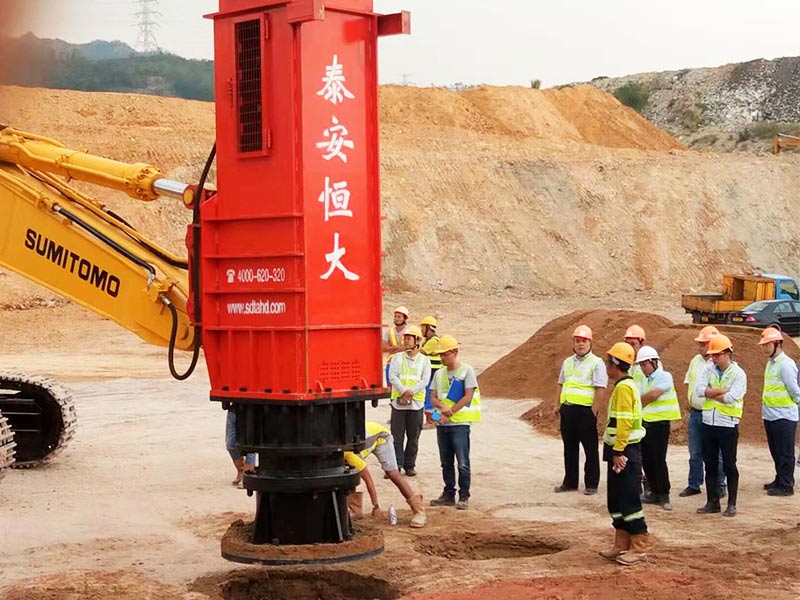
Typical areas of application could include projects such as low-rise structures like housing and schools, embankments, roads and pavement areas. Having the Rapid Impact Compactor mounted on a tracked machine gives it the versatility to move about in narrow and limited height spaces, such as within existing warehouses. With regard to its mobility, the RIC is able to be transported as a single unit, with the impact foot removed and the front end lowered horizontally on a flat-bed trailer. The machine can be ready to work just a few minutes after off-loading. If road restrictions apply, the unit can be easily split into two loads with the excavator travelling separately from the hammer. Re-assembly is achieved in less than two hours.
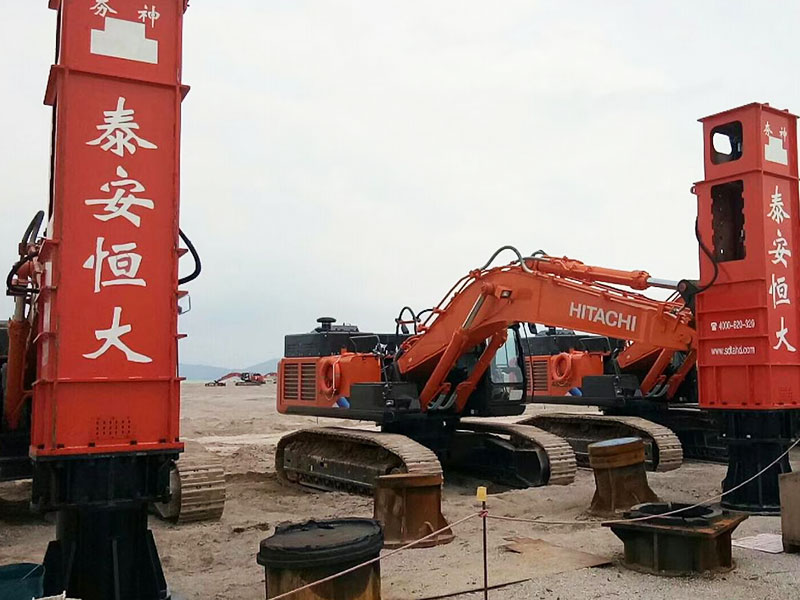
The RIC is an innovative dynamic compaction device based on the piling hammer technology and is used to increase the load-bearing capacity of soils through controlled impacts. The general idea of this method is to drop a falling weight from a relatively low height onto a special foot assembly at a fast rate while the foot remains permanently in contact with the ground.